Panic Attack Therapist Denver, CO
ERP Online Therapy for Panic Attacks in Colorado

You are terrified of having another panic attack.
Whether it’s happened once or many times, that fear has stuck around and you just can’t shake it. Panic attacks are the worst feeling in the world, and honestly, you would do almost anything to keep it from happening again, even if that means pulling back from the places and experiences that used to feel like just... life.
So you start to avoid. And at first, it actually feels like a relief: "phew, I don't have to deal with that after all." You exhale. You feel safe, at least for a little while. But then something starts to shift, quietly at first, and then in a way you really cannot ignore. Your life starts to feel smaller. The places you used to go, the things you used to do without even thinking about it, they start to slip away one by one. Each time you avoid something it feels like the right call in the moment, but somewhere underneath all of it, you can feel what’s happening… Your world is shrinking.
And you want so badly for that not to be the answer. You want to live your life, fully, without fear quietly running the show. But you feel overwhelmed, and you’re honestly not sure how to move forward. You know something has to change. You just aren’t sure what that looks like yet.
And yet, here you are…
Underneath all of the fear, avoidance, and exhaustion of managing it all, there is still a part of you that wants something different. A part of you that remembers what it felt like to move through the world without checking every exit, without running the mental calculations before every outing, without dreading what might happen next.
You didn’t come this far just to keep your life small. Wanting more than this is actually the most honest, courageous thing you could be feeling right now.
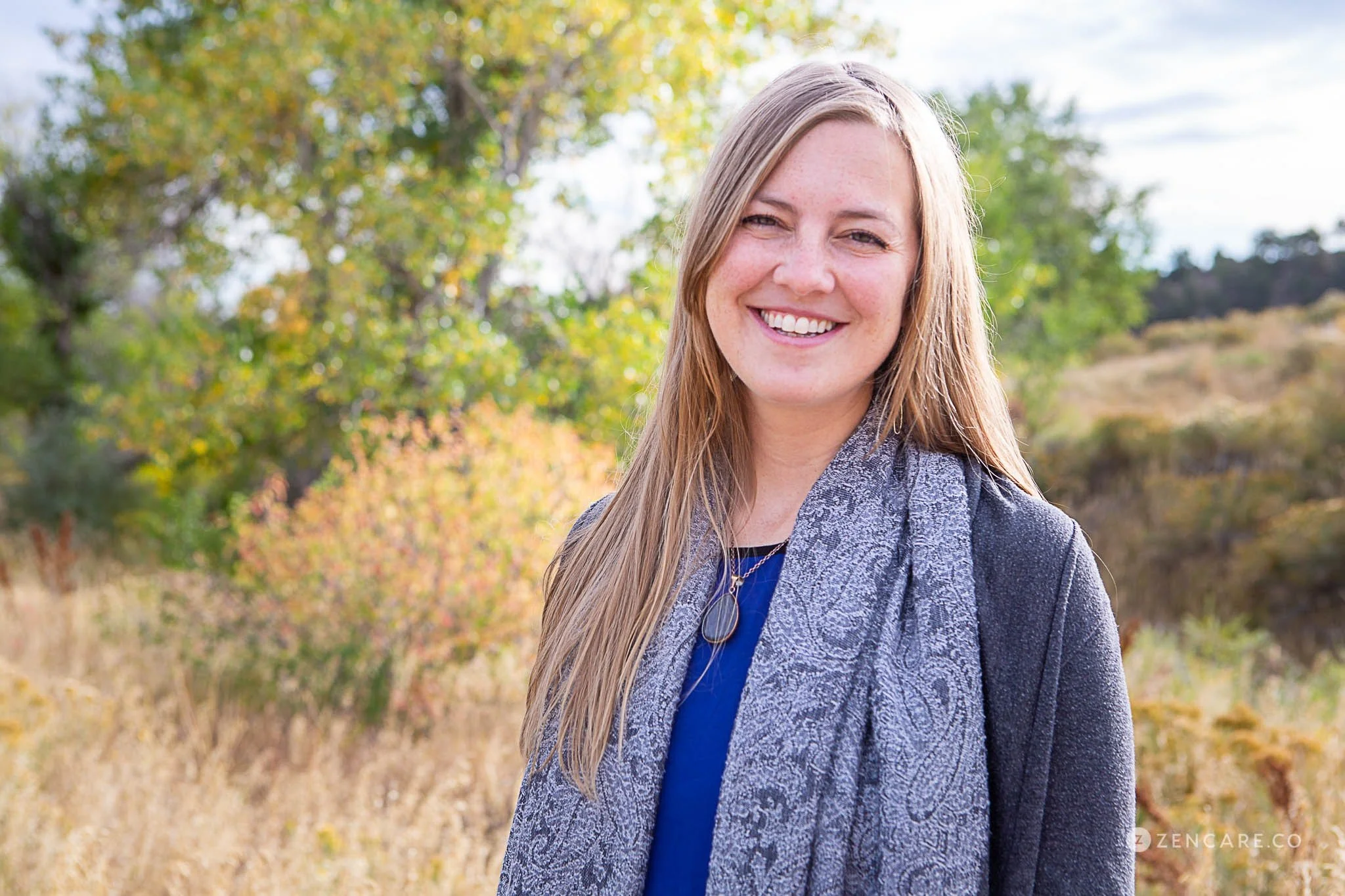
Meet Your Panic Attack and Anxiety Therapist in Colorado
Hi! I’m Alison, a Licensed Clinical Social Worker (LCSW) based in Denver, CO, and I specialize in panic attack therapy and anxiety disorders. My practice is completely virtual, which means you can do this work from wherever you feel most comfortable, whether that is your living room, your car on a lunch break, or anywhere else that feels like yours. No commute, no waiting room, no extra hurdle between you and the help you are looking for.
I believe people deserve more than just coping strategies to get through the day. Real freedom from the cycles of panic attacks is possible, and I have seen it happen, even for people who have been struggling for a very long time.
Most people I work with are exhausted. They’re frustrated with themselves. They’ve tried to push through, or talk themselves out of it, or just avoid enough that they can function, and none of it has worked the way they hoped.
I bring warmth, empowerment, and a deep respect for how hard this is. I also bring specialized clinical training that gives us a real roadmap forward, not just a space to vent. Many clients find that having a clear, structured approach actually feels like a relief after years of trying to figure this out on their own. You do not have to keep white-knuckling through this.
How Panic Attack Therapy and Anxiety Treatment Works
The primary approach I use is called Exposure and Response Prevention (ERP) and it is the gold-standard, evidence-based treatment for panic disorder and anxiety. As an ERP therapist, I won’t ask you to just think more positively or breathe through it. Instead, we work together to gradually and systematically reduce the power that fear has over your choices.
I also bring an Internal Family Systems (IFS)-informed lens to this work. IFS is a gentle, compassionate framework that helps us understand the different parts of you that show up around anxiety: the part that panics, the part that avoids, the part that is exhausted and just wants relief. Rather than fighting those parts or trying to eliminate them, we get curious about what they’re carrying and what they actually need. Many clients find that combining ERP and IFS creates a kind of wholeness to the work. The ERP helps retrain your nervous system's response to fear. The IFS piece helps you understand yourself more deeply along the way, so that healing feels less like a battle and more like coming home to yourself.
Here’s what our work together can look like:
- We identify the specific situations, sensations, or thoughts that trigger your panic.
- We build a plan together that feels manageable, not overwhelming, moving at a pace that feels challenging yet sustainable.
- We practice facing those fears in structured, supported ways so your nervous system learns that it can handle them.
- Along the way, we get curious about the parts of you that have been working so hard to keep you safe, deepening self-understanding and compassion.
- You slowly get back to living your life, learning that you can do hard things!
This is not about forcing yourself to tough it out alone. It is collaborative, compassionate, and grounded in decades of research. Clients who engage fully in this process often report feeling a sense of freedom they didn’t think was possible anymore. That is what I am here to help you find.
You Deserve to Live Your Full Life
Panic attacks and anxiety don’t have to be what defines your days or shrinks your world. Freedom from these cycles is real, and it is within reach, even if it doesn’t feel that way right now.
If you’re ready to take the first step, I would love to connect. Please feel free to reach out to me to schedule your free consultation call. I’d be honored to support you!
Are you ready to find freedom from the panic attack cycle and get back to living your life fully?

Frequently Asked Questions
What is panic attack therapy and how do I know if I need it?
Panic attack therapy is a focused, evidence-based approach to helping people who experience sudden episodes of intense fear, racing heart, difficulty breathing, dizziness, or a sense that something terrible is about to happen. If panic attacks have started to influence where you go, what you do, or how freely you move through your life, therapy can help. You do not need to have a formal diagnosis to reach out. If fear is making your world smaller, that is reason enough.
What is ERP and why do you use it for panic and anxiety?
ERP stands for Exposure and Response Prevention. It is the most well-researched, effective treatment available for panic disorder and anxiety. Rather than helping you avoid or manage around your fears, ERP works by gradually and gently helping you face them in a supported, structured way. Over time, your nervous system learns that it can handle the things it has been dreading, and the fear loses its grip. Many clients find this approach feels different from other therapy they’ve tried; it can be hard work and it can also be incredibly empowering.
What does IFS-informed therapy mean, and how does it fit with ERP?
IFS stands for Internal Family Systems. It is a compassionate framework for understanding the different parts of yourself that show up in difficult moments: the part that panics, the part that avoids, the part that is exhausted and just wants peace. When used alongside ERP, the IFS lens adds a layer of self-understanding and self-compassion to the work. You are not just retraining your nervous system; you are also getting to know yourself better along the way. Many clients report that this combination makes the work feel more whole and more human.
Do you offer in-person sessions?
No, all of my sessions are held virtually. This means you can access panic attack therapy and anxiety treatment from anywhere in Colorado. Many clients find that doing this work from the comfort of their own space actually supports the process.
Do I have to live in Denver to work with you?
Nope! Because all sessions are virtual, I’m able to work with anyone located in the state of Colorado. If you are in Denver or anywhere else in Colorado and are looking for an ERP therapist or anxiety specialist, you are welcome to reach out.
How long does panic attack therapy usually take?
The length of treatment varies from person to person and depends on factors like how long you have been struggling, the severity of your symptoms, and how consistently you are able to engage with the work between sessions. That said, ERP is generally considered a shorter-term, goal-focused approach compared to some other forms of therapy. Many clients begin to notice meaningful shifts within a few months of consistent work. A consultation call is a good place to get a clearer sense of what to expect for your specific situation.
What happens during a first session?
The first session is really about getting to know you. There is no pressure to dive into the hardest stuff right away. I will ask about what's been going on, what you've already tried, and what you're hoping for. It is also a chance for you to ask questions and get a feel for whether this is the right fit. There is no pressure to have everything figured out before you show up.
How much does panic attack therapy cost, and do you take insurance?
I currently accept the following insurances: Medicaid (CO Access), United Healthcare, and Aetna. If you do not have insurance or don’t want to use it, my private pay rate is $170 per 55 minute session. I am happy to provide superbills if you wish to request out-of-network reimbursement from your insurance company.
I have tried therapy before and it did not really help. How is this different?
That is more common than you might think, and it doesn't mean therapy won't work for you. It often means the approach wasn't the right fit, or the timing wasn't right. The combination of ERP and IFS-informed therapy that I use is specifically designed for people whose panic or anxiety feels stuck or hard to shift. ERP is different because it is a structured, targeted approach designed specifically for these kinds of fears. It is not just talk therapy. It involves practicing new responses to fear in real time, with support. An IFS-informed approach also offers curiosity and compassion, which can foster a more loving relationship with yourself overall.
How does virtual therapy work?
Sessions are held via a secure, HIPAA-compliant video platform. You join from your phone, tablet, or computer at your scheduled appointment time. Most clients find the format easy to use and surprisingly comfortable once they settle in.
Is what I share in therapy confidential?
Yes. Everything you share in therapy is confidential, with a few narrow legal exceptions that I will explain during your first session. Your privacy is taken seriously, and the virtual platform used for sessions is fully HIPAA-compliant.
How do I get started with panic attack therapy in Colorado?
Your first step is to schedule a consultation call. You can reach out via my contact form, email me at alison@indigotherapyandwellness.com, or call me at 720-673-5564. I would be honored to connect with you!
Are you ready to feel more confident and live more freely?
Beginning online therapy in Colorado can feel like a big step, and you don’t have to figure it all out on your own!
I offer a free 15-minute phone consultation where we can talk more about what you’re experiencing, answer any questions you may have, and see if we’re a good fit for working together. Please feel free to reach out through my contact form or schedule a call through my Zencare profile.
I’d be honored to connect with you!