OCD Therapy Denver
ERP Online Therapy for OCD in Colorado

You're exhausted. But it feels like you can't stop. You just want to feel better, to actually relax, to stop worrying so much. You're sick of feeling out of control, like you don't actually get to do what you want to do. Because OCD tells you what you have to do. No matter how much you try, it just never seems to end.
If any of that sounds familiar, you're not alone. And you're not stuck forever. Working with an OCD therapist can help you break the cycle and start getting your life back.
And You’re Still Fighting…
The fact that you're here, reading this, means something. You haven't accepted this as just the way things are. Some part of you still believes there's a way out of the cycle, a way to get your life back. That part is right.
OCD is exhausting and relentless, but it is also treatable. Real change is possible, and you don't have to keep white-knuckling it alone.
It's hard to say how things got to this point.
Maybe you're asking a loved one for constant reassurance. Maybe you're checking the locks several times a day, counting to a safe number, washing your hands over and over until they feel clean enough, until they feel just right. You know it's not always rational, but it doesn't feel like a choice. It feels like you have to.
At times it seems innocent enough. Just a quick check, just a little reassurance, and then you can relax. And you do relax… at least for a moment. But then the doubt comes creeping right back in. What if the door didn't actually lock? Just one more check, and then you can relax again. And the cycle repeats. And it takes up So. Much. Time.
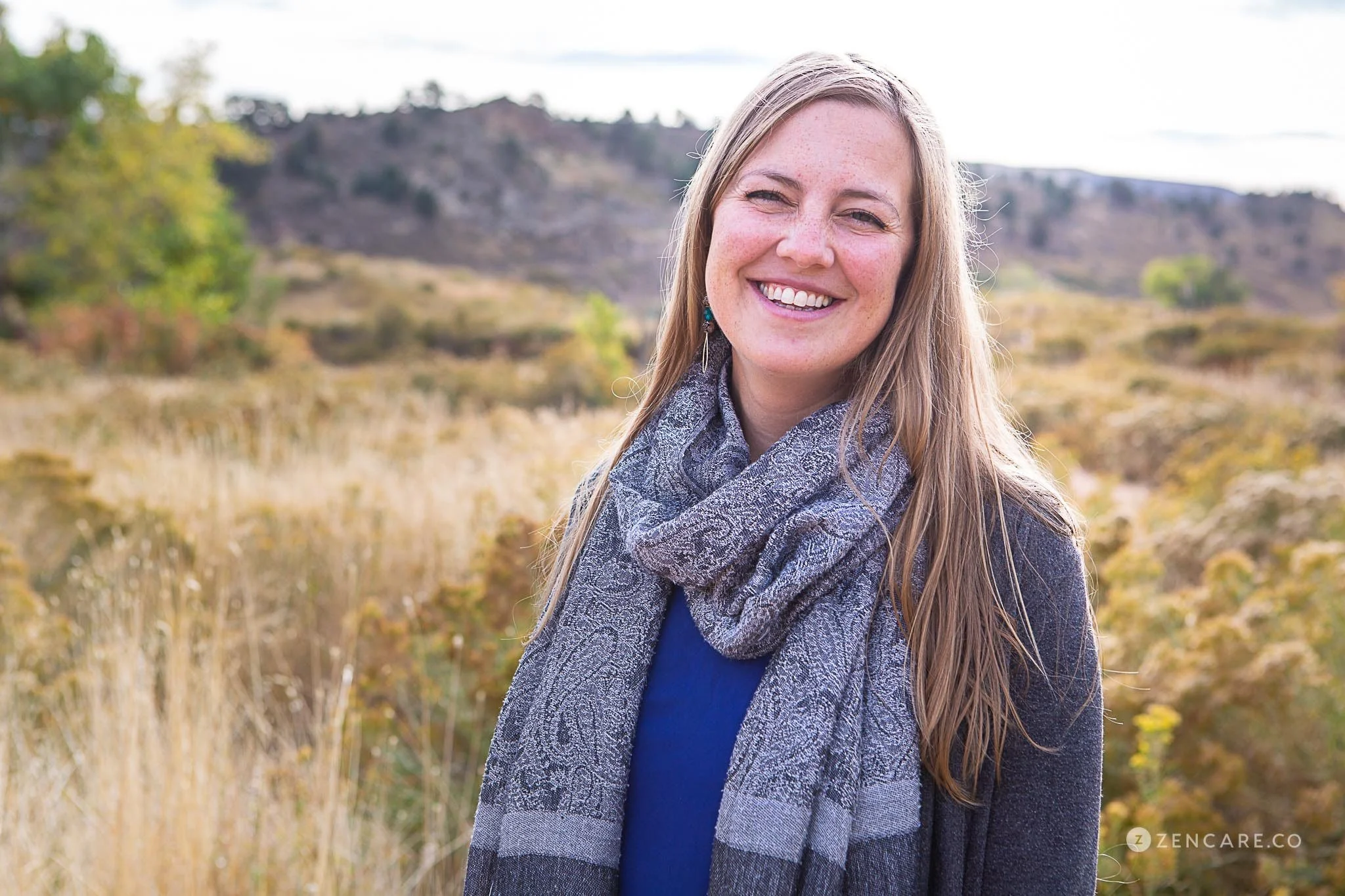
My approach is warm, empowering, and grounded in Exposure and Response Prevention (ERP) therapy, evidence-based treatment that actually works for OCD. I'm not here to just talk about your symptoms. I'm here to help you learn how to respond to OCD differently, so that over time, it loses its grip. Clients who work with me often describe a gradual but real shift, from feeling like OCD is in the driver's seat to feeling like they are. That shift takes work, but it is absolutely possible.
I also bring an IFS-informed lens to this work, which means that alongside ERP therapy for OCD, we make space for something deeper. IFS, which stands for Internal Family Systems, is a way of understanding yourself that gets curious about the different parts of you, including the parts that are worried or scared, and the parts that have been working so hard to keep you safe. Understanding those parts with curiosity and compassion, rather than frustration or shame, changes the relationship you have with yourself. And that matters. Because living with OCD can take a real toll on how you see yourself, and healing isn't just about stopping the compulsions. It's about learning to treat yourself with the same kindness you'd offer anyone else who was struggling this hard.
I believe that OCD is not a life sentence. The cycles feel endless right now, but they are not permanent. With the right support and the right approach, people do get better. Not just a little better. Genuinely, meaningfully better, in ways that change how they move through their days and their lives.
How OCD Treatment Works
Treating OCD effectively requires a specific approach, and not all therapy is created equal when it comes to OCD. The gold standard treatment is called ERP, which stands for Exposure and Response Prevention. It is the most well-researched, most effective treatment available for OCD, and it works by gradually helping you face the fears and uncertainty that drive the cycle without engaging in the compulsions that temporarily relieve the anxiety.
That might sound scary. Most people feel that way at first. But ERP is done carefully, collaboratively, and at a pace that feels manageable. You are never pushed faster than you're ready to go. Woven into this work is an IFS-informed approach that encourages you to get curious about your inner world, to understand the parts of you that OCD has been driving, and to build a genuinely kinder relationship with yourself along the way. Over time, many clients find that they:
Meet Your OCD and Anxiety Therapist in Denver
Hi! I'm Alison, a Licensed Clinical Social Worker (LCSW) and OCD therapist serving adults across Colorado through online therapy.
I work with people who are caught in the cycles of OCD, people who are exhausted from the checking, the reassurance-seeking, the rituals that eat up hours of their day and leave them feeling more out of control.
- Experience significant reductions in the time OCD takes up in their day
- Feel less compelled to engage in rituals and compulsions
- Build a genuine tolerance for uncertainty rather than needing to resolve it immediately
- Develop more self-compassion and a deeper understanding of themselves
- Get back to doing the things OCD has been keeping them from
- Learn that they can do hard things!
Because I offer online therapy throughout Colorado, you can do this work from wherever you are. Your home, your office, anywhere you have a private space and a reliable connection.
You Don't Have to Let OCD Keep Running the Show
If you’re ready to experience freedom from the OCD cycle and get back to living your life fully, please feel free to reach out and schedule your free consultation. I’d be honored to connect with you!
Are you ready to find freedom from the OCD cycle and get back to living your life?

Frequently Asked Questions
What is ERP, and is it really the best treatment for OCD?
ERP stands for Exposure and Response Prevention, and yes, it is the most well-researched, most effective treatment available for OCD. It works by gradually helping you face the situations, thoughts, and uncertainty that trigger the OCD cycle, without engaging in the compulsions that temporarily relieve the anxiety. Over time, your nervous system learns that it can tolerate uncertainty without needing to resolve it through rituals. That learning is what breaks the cycle. ERP is not about forcing yourself to do frightening things all at once. It is done carefully, collaboratively, and at a pace that feels workable for you.
Will ERP make my anxiety worse before it gets better?
ERP does involve intentionally sitting with discomfort, which can feel counterintuitive at first. But it is done gradually and collaboratively, always at a pace that feels manageable. You are never pushed to face something you're not ready for. Most clients find that the anxiety they experience during ERP is far more tolerable than the exhaustion of living inside the OCD cycle indefinitely. And over time, the anxiety genuinely decreases as your nervous system learns it doesn't need the compulsions to feel okay.
How long does OCD treatment usually take?
Everyone's experience is different, and the timeline depends on many factors, including the severity of symptoms and how long OCD has been present. Many clients begin to notice meaningful shifts within a few months of consistent work. Others find that deeper or more complex OCD patterns take longer to address. I will check in with you regularly to make sure therapy is feeling effective and that you’re getting what you need out of our time together.
What is IFS, and how does it fit into OCD treatment?
IFS stands for Internal Family Systems. It is a way of understanding yourself that recognizes we all have many different inner parts, each with its own feelings, fears, and motivations. In OCD treatment, an IFS-informed approach helps you get curious about the parts of you that OCD has been driving, the anxious part, the part that needs certainty, the part that is utterly exhausted. Rather than fighting those parts or feeling ashamed of them, you learn to understand them with compassion. I am an IFS-informed therapist, meaning I draw from IFS principles as part of my broader approach, though I am not a certified IFS practitioner.
Do you offer in-person therapy?
No, all of my sessions are via online therapy, and I work with adults throughout Colorado. Many clients find that working from their own space makes it easier to practice new skills in the environment where OCD actually shows up. Sessions are held over a secure, HIPAA-compliant video platform.
I'm not in Denver. Can I still work with you?
Of course! I offer online therapy throughout Colorado, so you can work with me from anywhere in the state. Whether you're in Denver, Boulder, Colorado Springs, Fort Collins, Pueblo, or a smaller community, you're welcome to reach out.
How do I know if what I'm experiencing is actually OCD?
OCD can look very different from person to person. It's not always about germs or locked doors. OCD shows up as intrusive thoughts, images, or urges that feel distressing, followed by compulsions, which are behaviors or mental acts done to temporarily relieve that distress. If you feel like you have to do something even when you know it doesn't fully make sense, and if the relief never quite lasts, that pattern is worth exploring with a professional. You don't need a formal diagnosis to reach out; a consultation is a good place to start.
What if I've tried therapy before and my OCD didn't get better?
Not all therapy is equally effective for OCD. Many people spend years in general talk therapy without significant improvement, not because they didn't try, but because OCD responds best to a specific, evidence-based approach like ERP. If previous therapy didn't help, it may simply be that the approach wasn't the right fit for what OCD actually needs. A consultation with an OCD-informed therapist is a good way to get a clearer picture of what might actually move the needle.
How do I know if I'm ready to start?
You don't have to feel ready. Most people who reach out are scared, skeptical, or exhausted, often all three at once. If you're tired of living by OCD's rules and some part of you believes things could be different, that's enough to start with. You don't need to have it figured out before your first session.
What does a first session look like?
The first session is really about getting to know you. There is no pressure to dive into the hardest stuff right away. I will ask about what's been going on, what you've already tried, and what you're hoping for. It's also a chance for you to ask questions and get a feel for whether working together feels like a good fit. Many clients say they feel a sense of relief just from being heard in that first conversation.
What does online therapy in Colorado cost, and do you take insurance?
I currently accept the following insurances: Medicaid (CO Access), United Healthcare, and Aetna. If you do not have insurance or don’t want to use it, my private pay rate is $170 per 55 minute session. I am happy to provide superbills if you wish to request out-of-network reimbursement from your insurance company.
Is therapy confidential?
Yes. Everything you share in therapy is confidential, with a few specific legal and ethical exceptions that I will explain during your first session. You can speak freely knowing that what you share stays between you and your therapist. That sense of safety is foundational to the work.
How do I get started with OCD therapy?
Your first step is to schedule a consultation call. You can reach out via my contact form, email me at alison@indigotherapyandwellness.com, or call me at 720-673-5564. I would be honored to connect with you!
Are you ready to experience freedom from the OCD cycle?
Beginning online therapy in Colorado can feel like a big step, and you don’t have to figure it all out on your own!
I offer a free 15-minute phone consultation where we can talk more about what you’re experiencing, answer any questions you may have, and see if we’re a good fit for working together. Please feel free to reach out through my contact form or schedule a call through my Zencare profile.
I’d be honored to connect with you!