ERP Therapist Denver, Colorado
ERP Online Therapy in Colorado

You're so tired of feeling out of control of your mind.
You know your worries aren’t always rational, but you just can't stop. Checking things. Asking for reassurance. Going back one more time, just to make sure. Or maybe it's the panic that hits out of nowhere, the racing heart and the tunnel vision and the absolute certainty that something is very wrong, even when part of you knows it probably isn't. Maybe it's the thing you've started avoiding, the place, the situation, the experience you've quietly stopped letting yourself have because the dread just isn't worth it anymore. You hate feeling uncertain, and you keep hoping that this time, whatever you do will finally make it go away. But it never quite does. No matter what you do, the anxiety always wins.
The doubts and fears are relentless: Is this the right choice? Am I going to get sick from this? Am I a bad person? What if I panic and can't get out? What if I can't handle it? You try to push the thoughts away, but they keep coming back. So you check again, or replay the moment until it feels resolved, or reach out for reassurance one more time, or simply don't go. It helps for a little while... Then the cycle starts over.
You're trying so hard to do all the right things. You really are. But somewhere along the way your life has started getting smaller and smaller, and you're frustrated in a way that's hard to put into words. You're starting to doubt who you are as a person. And you're completely exhausted from trying.
And still, here you are…
A part of you knows this isn't the whole story of your life. You know that there has to be more to life than this anxiety and fear, even if you’re not sure what to do or how to start.
You didn't end up here because something is deeply wrong with you. You ended up here because your mind learned to treat uncertainty like a threat, and it has been working overtime ever since trying to protect you. That's not a character flaw. It's a pattern. And patterns can change.
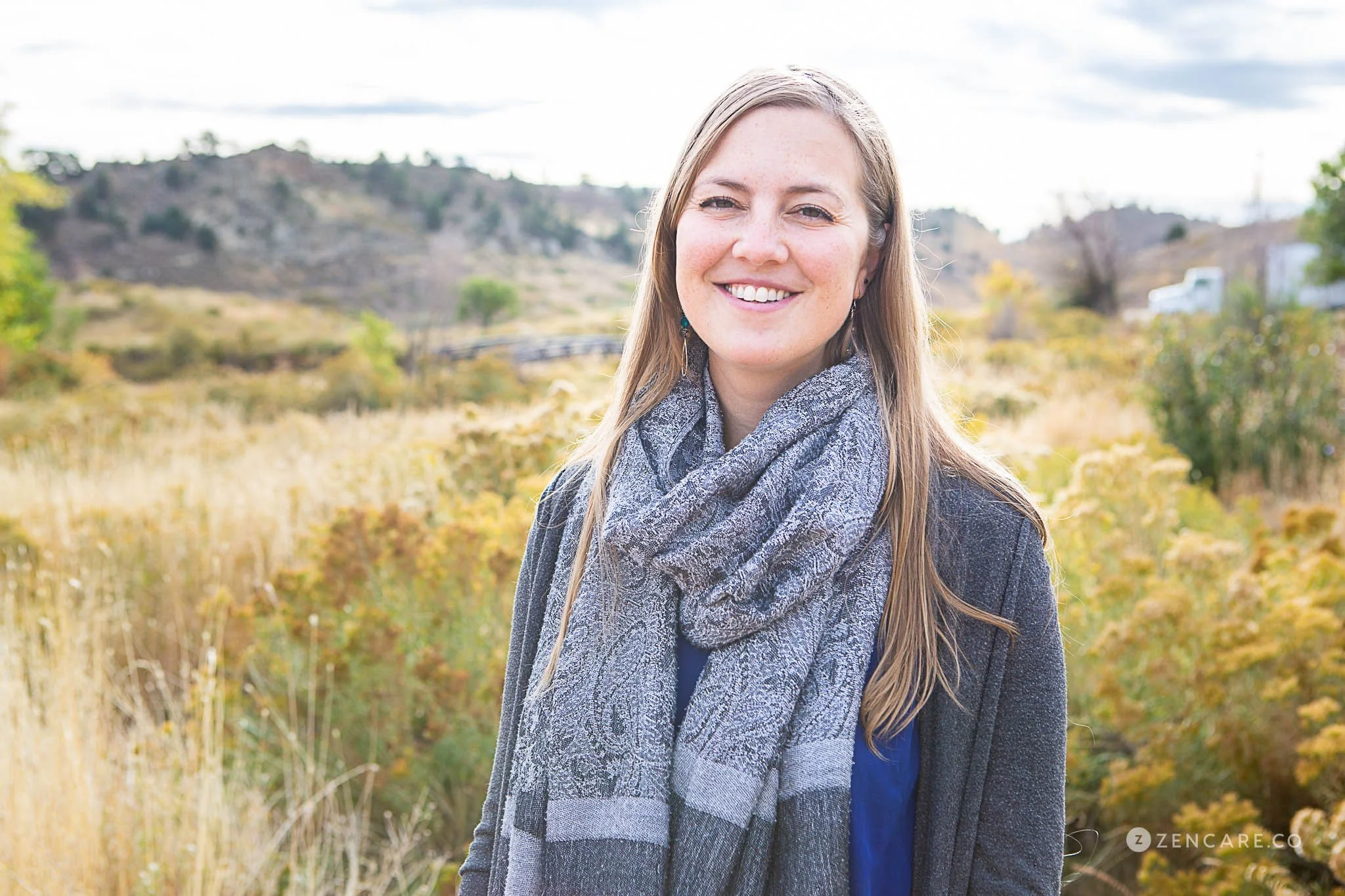
Meet Your OCD and Anxiety Therapist in Denver
Hi! I'm Alison, a Licensed Clinical Social Worker (LCSW) and therapist based in Denver offering online therapy across Colorado. I work with people who are stuck in the exhausting loops of OCD, anxiety, panic attacks, and phobias, and I help them find a way out.
I know how frustrating it feels to understand that what you're doing isn't helping and still feel completely unable to stop. That gap between knowing and being able to do something different is real, and it's not a willpower problem. It's how anxiety and OCD work. My job is to help you close that gap, not by pushing harder or trying to think your way out, but by learning a fundamentally different way of relating to uncertainty and to your own mind.
The goal of therapy isn't just symptom reduction. It's getting your life back. The relationships, the spontaneity, the sense of being present in your life without your mind constantly pulling you somewhere else. That's what I'm working toward with you.
Clients who work with me often describe feeling genuinely surprised that change was possible after years of feeling stuck. Many find that as they move through treatment, the thoughts and fears don't necessarily disappear, but they lose their grip. Life starts to open back up. The things that felt impossible start to feel within reach again.
How Therapy for OCD, Anxiety, Panic, and Phobias Works
The approach I use is called Exposure and Response Prevention (ERP). It is the gold standard treatment for OCD and a core component of effective treatment for anxiety disorders, panic, and phobias, with decades of research behind it. It works differently than most people expect.
ERP is not about forcing yourself to sit with discomfort and white-knuckle through it. It's a gradual, supported process of learning to tolerate uncertainty and fear without relying on avoidance or compulsions to feel okay. Whether the thing driving the cycle is an intrusive thought, a wave of panic, or a situation you've been quietly avoiding for years, the underlying work is the same: helping your nervous system learn that the threat isn't as dangerous as it felt, so the urge to escape begins to lose its power.
Whether you're searching for an OCD therapist in the Denver area or need the flexibility of online therapy, I offer sessions across Colorado so that geography or schedule doesn't have to stand between you and effective therapy. In our work together, you can expect:
- A thorough assessment of how OCD, anxiety, panic, or phobias show up for you personally, because no two people's experience looks exactly the same
- A collaborative, step-by-step approach that moves at a pace that feels challenging but not overwhelming
- Support in understanding the difference between helpful coping and avoidance or compulsions that are quietly making things worse
- Gradual exposure work that helps you build real tolerance for uncertainty and fear, not just manage symptoms temporarily
- Getting back to living your life and learning that you can do hard things!
This is not about becoming someone who never has intrusive thoughts or never feels anxious. It's about becoming someone who can have those experiences without being hijacked by them. It’s about getting your life back and trusting that you can handle whatever comes your way.
You Don't Have to Keep Living Inside This Cycle
Real change is possible, and it doesn't require you to be tougher or more disciplined. It requires the right support and a treatment approach that actually matches what you're dealing with.
If you're ready to find freedom from the cycles of anxiety, OCD, panic attacks, or phobias, please feel free to reach out to me and schedule your free consultation. I’d be honored to support you on your journey!
Are you ready to experience freedom from the cycles of OCD, anxiety, and fear?

Frequently Asked Questions
What is ERP therapy and how does it help?
ERP stands for Exposure and Response Prevention. It is widely considered the most effective treatment for OCD and is a central component of evidence-based treatment for anxiety disorders, panic, and phobias as well. ERP works by gradually helping you face the situations, thoughts, or sensations that trigger anxiety or fear, while learning to resist the compulsions or avoidance you'd normally use to find relief. Over time, your nervous system learns that the uncertainty or discomfort is tolerable and that you don't need to escape it to be okay. It is a structured, collaborative process, not something you're pushed through too fast or expected to manage alone.
Is ERP therapy hard? Will it make my anxiety worse before it gets better?
ERP does involve sitting with discomfort, and that can feel daunting before you start. In practice, it is paced carefully and collaboratively. You won't be thrown into your worst fears on day one. The process is gradual, and most clients find that their confidence builds alongside their ability to tolerate uncertainty and fear. It can feel uncomfortable at times, and that discomfort is actually part of how the healing works. You will not be doing it alone.
What is OCD and how do I know if I have it?
OCD, or Obsessive-Compulsive Disorder, is a cycle of intrusive, unwanted thoughts (obsessions) and repetitive behaviors or mental acts (compulsions) that you use to try to relieve the anxiety those thoughts bring. The doubts feel urgent and real, even when part of you knows they may not be. OCD can look like checking locks or appliances, seeking reassurance from people you trust, replaying conversations or events in your mind, avoiding certain people or situations, or struggling with intrusive thoughts that feel deeply out of character. If you recognize yourself in any of this, reaching out to an OCD therapist is a good first step toward understanding what you're dealing with.
What kinds of OCD do you treat?
OCD takes many different forms. Some people struggle primarily with contamination fears and cleaning or checking compulsions. Others deal with harm obsessions, relationship OCD, scrupulosity, just-right OCD, or intrusive thoughts that feel shameful or confusing. Many people's OCD shifts over time and finds new things to latch onto. Regardless of how OCD shows up for you, ERP addresses the underlying cycle, which means it can be adapted to your specific experience.
Do you also treat anxiety, panic attacks, and phobias?
Yes. OCD, anxiety disorders, panic attacks, and phobias often share the same underlying cycle, and many of the clients I work with are navigating more than one of these at once. Whether your primary concern is OCD, a specific phobia, panic that seems to come out of nowhere, or generalized anxiety that makes daily life feel heavy, the treatment approach is grounded in the same evidence-based framework. We work together to understand how fear and avoidance are running the show, and we build a path out of it.
What does treatment for panic attacks look like?
Panic attacks can feel terrifying, especially when they seem to come out of nowhere. Treatment for panic focuses on helping you understand what's actually happening in your body during a panic attack, and gradually changing your relationship to those sensations so they lose their power to frighten you. A significant part of the work involves learning to stop avoiding the situations or physical feelings associated with panic, which is often what keeps the cycle going. Over time, most clients find that the panic attacks become less frequent, less intense, and much less disruptive to daily life.
How do you treat phobias?
Phobias are treated through gradual, supported exposure to the feared situation or object, moving at a pace that feels manageable and building from there. The goal is not to eliminate all discomfort around the feared thing, but to reduce the fear enough that it no longer controls your choices or limits your life. Phobia treatment tends to be very focused and often produces meaningful results relatively quickly compared to other concerns.
How long does treatment take?
Everyone's experience is different, and the timeline depends on many factors, including the severity of symptoms and how long they’ve been present. Many clients begin to notice meaningful shifts within a few months of consistent work. Others find that deeper or more complex anxiety or OCD patterns take longer to address. I will check in with you regularly to make sure therapy is feeling effective and that you’re getting what you need out of our time together.
Do you offer ERP online therapy for OCD and anxiety?
Yes. All sessions are conducted online, which means you can access therapy from anywhere in Colorado. Many clients find that doing this work from their own environment is actually helpful, since that's often where OCD, anxiety, and avoidance show up most.
I've tried therapy before and it didn't help. How is this different?
That's one of the most common things people share when they first reach out, and it makes sense. Many people with OCD or anxiety have tried general talk therapy or other approaches that weren't specifically designed for these concerns, and found that it didn't move the needle. ERP is different because it directly targets the cycle that keeps OCD, anxiety, panic, and phobias going rather than just helping you understand or process your thoughts. If you've done the work before and still feel stuck, that doesn't mean you're beyond help. It may mean you haven't yet had access to the right approach.
What can I expect from our first session?
The first session is mostly about getting to know you and understanding how OCD, anxiety, panic, or phobias are showing up in your life. There's no pressure to dive into the hard stuff right away. We'll talk about your history, what you've tried before, what your goals are, and what treatment might look like for you. It's also a chance for you to get a feel for whether working together feels like a good fit.
Is what I share in therapy confidential?
Yes. Everything you share in therapy is protected by confidentiality, with a small number of specific exceptions required by law, such as situations involving imminent safety concerns. Your OCD, your intrusive thoughts, your fears, and the things you're most ashamed of saying out loud are safe to bring into the room. In fact, those are often exactly the things that most need space and care.
How do I get started with ERP online therapy?
Your first step is to schedule a consultation call. You can reach out via my contact form, email me at alison@indigotherapyandwellness.com, or call me at 720-673-5564. I would be honored to connect with you!
Are you ready to experience freedom from the cycles of OCD, anxiety, and fear?
Beginning online therapy in Colorado can feel like a big step, and you don’t have to figure it all out on your own!
I offer a free 15-minute phone consultation where we can talk more about what you’re experiencing, answer any questions you may have, and see if we’re a good fit for working together. Please feel free to reach out through my contact form or schedule a call through my Zencare profile.
I’d be honored to connect with you!